
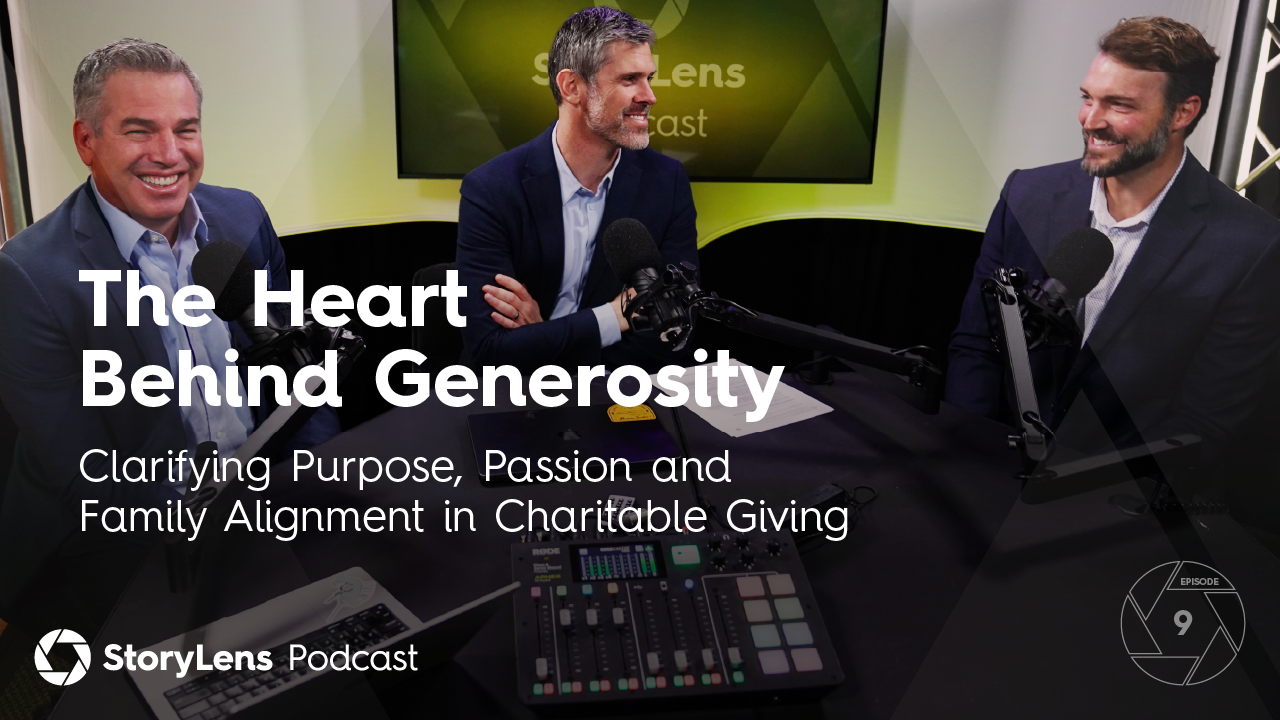
02 Feb The Heart Behind Generosity: Clarifying Purpose, Passion and Family Alignment in Charitable Giving
A conversation with Evan Lange
Charitable giving is often treated as a financial strategy. Tax deductions, donor-advised funds and structures tend to dominate the conversation. But in practice, generosity begins somewhere much deeper.
In this episode of the StoryLens Podcast, the StoryOne partners sit down with charitable planning expert Evan Lange to explore the heart behind generosity and why understanding a family’s story is essential to giving well.
Why do families feel drawn to charitable giving?
Because generosity is often rooted in personal experience.
Families are rarely charitable by accident. Giving is frequently connected to moments of pain, gratitude, faith or calling. As Evan explains, once families reach a level of stability or success, generosity becomes a way to process past experiences and invest in something larger than themselves.
Giving is not just about excess capital. It is often about meaning.
Why is estate planning more emotional than people expect?
Estate planning often becomes the final message someone leaves for their family.
That reality brings emotions to the surface. Old wounds, strained relationships, and unspoken expectations often show up during planning conversations. Legal documents cannot fix relationships, but thoughtful planning can prevent unnecessary harm.
Good estate planning requires space for reflection, not just execution.
Do most families understand why they give?
Not always.
Many families feel a strong desire to be generous but struggle to articulate why. Business owners spend years focused on building, operating and exiting companies. When liquidity arrives, charitable assets may accumulate before purpose is clearly defined.
Clarifying the “why” takes time, reflection and thoughtful conversation.
How does generosity help heal past hurts?
Giving can be transformative.
Evan shares that many charitable passions emerge at points of deepest hurt. Whether it is loss, hardship or exposure to suffering, generosity allows families to move forward with purpose. Giving becomes a way to bring healing, both personally and communally.
When generosity is aligned with story, it becomes deeply fulfilling.
Why does clarity matter more than the amount given?
Because generosity without direction can become passive.
Families often succeed in moving assets to the charitable side of the balance sheet but stop short of deploying them intentionally. Without clarity, charitable accounts can grow indefinitely without meaningful impact.
Purpose turns generosity from something you store into something you steward.
How should families involve the next generation in giving?
Intentionally and early.
Assuming the next generation will “figure it out” often leads to confusion or disengagement. Just like business succession, charitable succession requires communication, shared values and clear vision.
When families invite children and grandchildren into the giving conversation, generosity becomes a unifying force rather than a burden.
What role does stewardship play in charitable planning?
Stewardship reframes generosity as responsibility, not control.
Giving is not about maintaining authority from beyond the grave. It is about aligning resources with purpose and releasing them faithfully. True stewardship considers impact, timing and the people involved.
Generosity works best when heart and humility lead.
How does the StoryLens approach support charitable clarity?
StoryLens begins with listening.
Before recommending strategies or structures, StoryOne helps families uncover the experiences, values and beliefs that shape their generosity. When story comes first, strategy becomes clearer and more effective.
Because generosity, like planning, works best when it reflects who you truly are.
Stay Connected
Stay connected with the StoryLens Podcast for future conversations. Your story is anything but ordinary—and that’s exactly where we begin.