Episode 12: Conflict Without Combat
A Conversation About Conflict, Reconciliation, and Family Unity
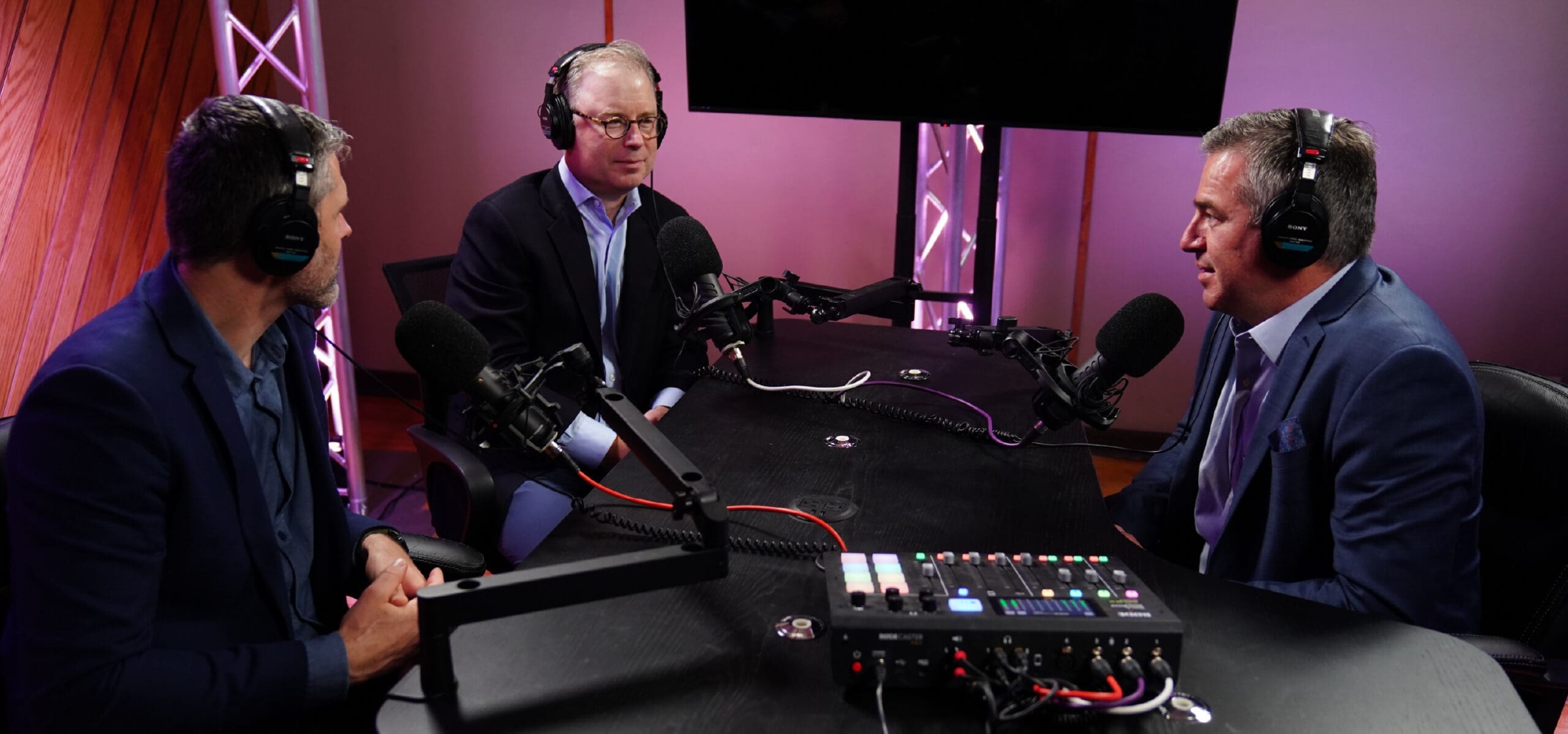
In this episode of the StoryLens Podcast, John Christensen and Cameron Bond sat down with marriage and family therapist Ken Howard to examine the difference between conflict and combat, why reconciliation is a learned skill, and how families can begin repairing what has broken.
Show Notes
GUEST INFORMATION:
Name: Ken Howard
Title/Credentials: Licensed Marriage And Family Therapist at Aspen Partnership
Background: Ken is a licensed Marriage and Family Therapist with experience helping couples build strong, healthy relationships, as well as working with children facing complex behavioral and mental health challenges.
Connect with guest: If you’d like to connect with Ken, you can reach him directly at:
ken@aspen-kc.com.
[00:01:04] – Why Relationships Matter in Wealth Planning
The episode opens on a question that financial advisors encounter more often than they expect: why do conversations about family wealth keep landing on family relationships? When shared assets, shared enterprises, and shared governance structures bind families across generations, relational health is not a soft consideration. It is a structural one.
“What’s the point of having wealth if it just feeds broken families?” — Ken Howard
[00:07:47] – Latent Learning in Families
Ken introduces the concept of latent learning: behavioral patterns absorbed through observation rather than direct instruction. Family systems transmit relational norms this way. Children learn how conflict functions, how emotion is handled, and how disagreement is managed by watching, not by being taught. Those patterns calcify early and tend to repeat unless they are named and interrupted.
“Latent learning is learning that you didn’t set out to learn, nobody set out to teach you, but boy did you learn it.” — Ken Howard
[00:13:36] – Combat vs. Conflict
The central framework of the episode. Combat seeks victory and produces winners and losers. Healthy conflict seeks understanding and intimacy. The distinction is not about tone or volume. It is about objective. When the goal of an interaction shifts to winning, the relationship absorbs the cost regardless of who prevails.
“When you’re in combat with somebody, there’s a winner and a loser. But conflict is about restoring intimacy.”— Ken Howard
[00:16:49] – The Role of Humility in Relationships
High achievers frequently excel in professional domains while struggling in close relationships. The skills and tools that produce professional success are often the same behaviors that damage intimacy. Ken explains why humility is the threshold condition for developing new relational skills: specifically, the recognition that a current pattern is not working and the willingness to learn a different one.
“Whatever I’m doing with my wife or my children isn’t working. I need to learn something else.” — Ken Howard
[00:20:29] – Forgiveness vs. Reconciliation
Forgiveness and reconciliation are distinct processes that are often conflated. Forgiveness is a decision: the release of relational debt. Reconciliation is a process: the rebuilding of trust through consistent demonstrated behavioral change over time. One is unilateral and immediate; the other is mutual and extended. Both are necessary.
“It’s not in forgiveness that you build trust. It’s in reconciliation, which is the process of behavior change over time.” — Ken Howard
[00:25:22] – The De-escalation Technique
Ken shares a specific technique: recognizing when emotional escalation has made productive exchange impossible and stepping away temporarily, not to avoid the conversation but to protect the relationship from damage caused by bad timing. The technique requires the self-awareness to know when you have crossed the threshold, and the discipline to step back rather than push through.
“I am no longer fit for human consumption. I cannot protect you from me.” — Ken Howard
[00:29:45] – Building New Relational Skills
Relational health is a developed skill set, not a fixed trait. People who grew up in dysfunctional relational environments can build healthier patterns through intentional practice. The capacity for healthy conflict is not something you either have or don’t; it is something you develop through repetition, feedback, and time.
“My primary language is dysfunction, but I’m learning to speak health.” — Ken Howard
[00:32:05] – The Case for Peacemaking
The episode closes on the distinction between peacemaking, the active and courageous pursuit of reconciliation, and peace-faking, the performance of harmony that leaves the underlying fracture intact. Genuine peacemaking requires the willingness to engage the discomfort rather than manage the surface.
“Blessed are the peacemakers, not the peace fakers.” — Ken Howard
Key Takeaways:
- Combat destroys intimacy; healthy conflict builds it by creating pathways to understanding and repair.
- Latent learning transmits relational dysfunction across generations before anyone recognizes the pattern.
- Forgiveness cancels the debt, but reconciliation requires demonstrated behavioral change over time.
- Humility is not a soft virtue for high achievers; it is the precondition for recognizing and closing a relational blind spot.
- Families with shared assets cannot afford to let relational fractures remain unaddressed. The dysfunction enters the governance structure.
- Relational health is a skill, not a trait. The patterns that were absorbed can be replaced by patterns that are chosen and practiced.
Check out Ken’s book recommendations for even more in-depth learning and discussion to help your family reshape it’s culture and break unhealthy patterns.
- Attachments: Why You Love, Feel, and Act the Way You Do by Clinton and Sibcy
-Best book I’ve read on the intersection of theology and attachment theory
- What Happened to You?: Conversations on Trauma, Resilience, and Healing by Bruce Perry
-Best book I’ve read on childhood trauma and the impact it has on us as adults
- When Anger Hurts (2nd Edition): Quieting the Storm Within by McKay
-Best book I’ve read on how to regulate anger
- The Comfort Crisis: Embrace Discomfort To Reclaim Your Wild, Happy, Healthy Self by Easter
-Great book on the importance of choosing to do hard things
Listen & Subscribe